Sitting Too Much After 50: Why Daily Movement Matters More Than You Think
Most of us know we should exercise.
We hear about walking.
Strength training.
Cardio.
Mobility.
Getting our 150 minutes a week.
But there is another part of the movement equation that gets much less attention:
How much time we spend sitting.
Modern life makes it easy to sit for hours at a time.
We sit at work.
We sit in the car.
We sit while watching television.
We sit while scrolling through our phones.
We sit through meetings.
We sit while eating.
And sometimes, even people who exercise regularly still spend most of the rest of the day barely moving.
That matters.
The original article was built around evidence linking prolonged sedentary behavior with higher risks of cardiovascular disease, type 2 diabetes, metabolic problems, and premature mortality. Pasted text
The phrase “sitting is the new smoking” may be too simplistic.
But the underlying message is still important:
Too much sitting is not harmless.
And after 50, when preserving muscle, mobility, metabolic health, and independence becomes increasingly important, daily movement deserves more attention.
You Can Exercise and Still Sit Too Much
This is one of the most important distinctions.
Exercise and sedentary behavior are related, but they are not the same thing.
You can go to the gym in the morning and still spend most of the next ten hours sitting.
You can walk for 30 minutes and then barely move for the rest of the day.
That does not mean the workout was wasted.
It means the rest of the day still matters.
The original article describes how work, entertainment, and technology have made everyday life increasingly sedentary. Pasted text
So the goal is not only:
exercise more.
It is also:
sit less and move more throughout the day.
Why Long Periods of Sitting Matter
The original article links prolonged sitting with several health concerns, including cardiovascular disease, insulin resistance, weight gain, metabolic syndrome, musculoskeletal problems, and poorer mental health. Pasted text
The simplest way to think about it is this:
When the body stays still for long periods, it is not using muscles, circulating blood, or handling glucose the same way it does when we are moving regularly.
That does not mean every hour in a chair causes damage.
It means that repeated, prolonged inactivity can become part of a larger pattern that works against healthy aging.
Muscle Loss Makes Movement More Important After 50
One reason this matters more as we get older is muscle.
The original article notes that age-related muscle loss can reduce strength and mobility, while lower activity levels can make the problem worse. Pasted text
That creates a cycle.
We move less.
We lose strength.
Movement becomes harder.
So we move even less.
Breaking that cycle is one of the most valuable things we can do.
Walking helps.
Strength training helps.
Standing up and moving regularly helps.
The objective is not to avoid chairs.
It is to avoid building a lifestyle around them.
Sitting and Metabolic Health
The original article also connects prolonged sitting with insulin resistance, blood sugar control, obesity, and metabolic syndrome. Pasted text
That is important because metabolic health becomes a bigger part of the healthy-aging conversation after 50.
Movement gives muscles something to do.
And active muscles use glucose.
Even light activity can be part of a better daily pattern than remaining still for hours.
This is one reason I like the idea of movement snacks.
Not food.
Movement.
A few minutes of walking.
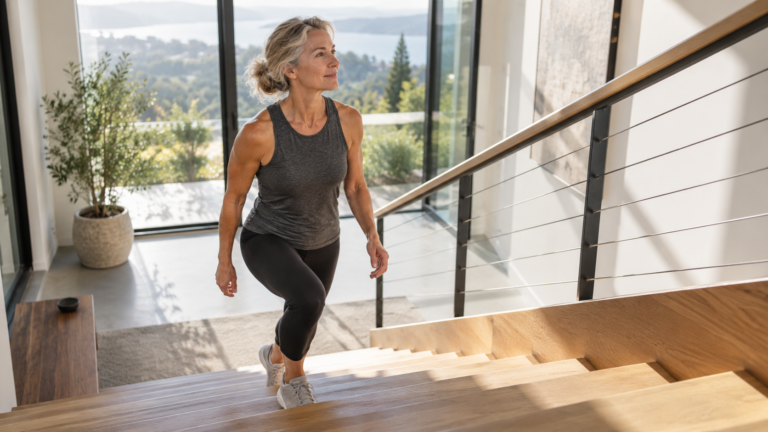
A flight of stairs.
A quick lap around the office.
A few bodyweight squats.
Standing up during a phone call.
These are not replacements for exercise.
They are ways to stop long stretches of inactivity from becoming the default.
Sitting Can Affect How Your Body Feels
The original article also discusses back pain, posture, muscle weakness, stiffness, and reduced mobility associated with long periods of inactivity. Pasted text
Anyone who has spent hours at a desk knows the feeling.
You stand up and everything feels tight.
Hips.
Hamstrings.
Lower back.
Shoulders.
Neck.
The issue is not simply posture.
It is lack of movement.
The body likes variety.
Sit.
Stand.
Walk.
Stretch.
Lift.
Change positions.
Healthy movement is dynamic.
The Mental Side of Movement
The article also points to a relationship between sedentary behavior and poorer mental health, including lower mood and reduced energy. Pasted text
That should not be surprising.
Movement changes how the day feels.
A short walk can break up mental fatigue.
Stepping outside can help reset attention.
Walking with another person adds social connection.
Movement does not solve every emotional or mental health problem.
But spending the entire day physically inactive rarely helps.
What Happens When You Move More
The original article identifies several potential benefits of reducing sedentary time and increasing movement, including better cardiovascular function, improved metabolic health, stronger muscles, better mobility, and improved quality of life. Pasted text
The key word is not intensity.
It is consistency.
You do not need to turn every movement break into a workout.
The bigger objective is to stop allowing hours to pass without moving.
Build Movement Into the Workday
This is where the original article becomes especially practical.
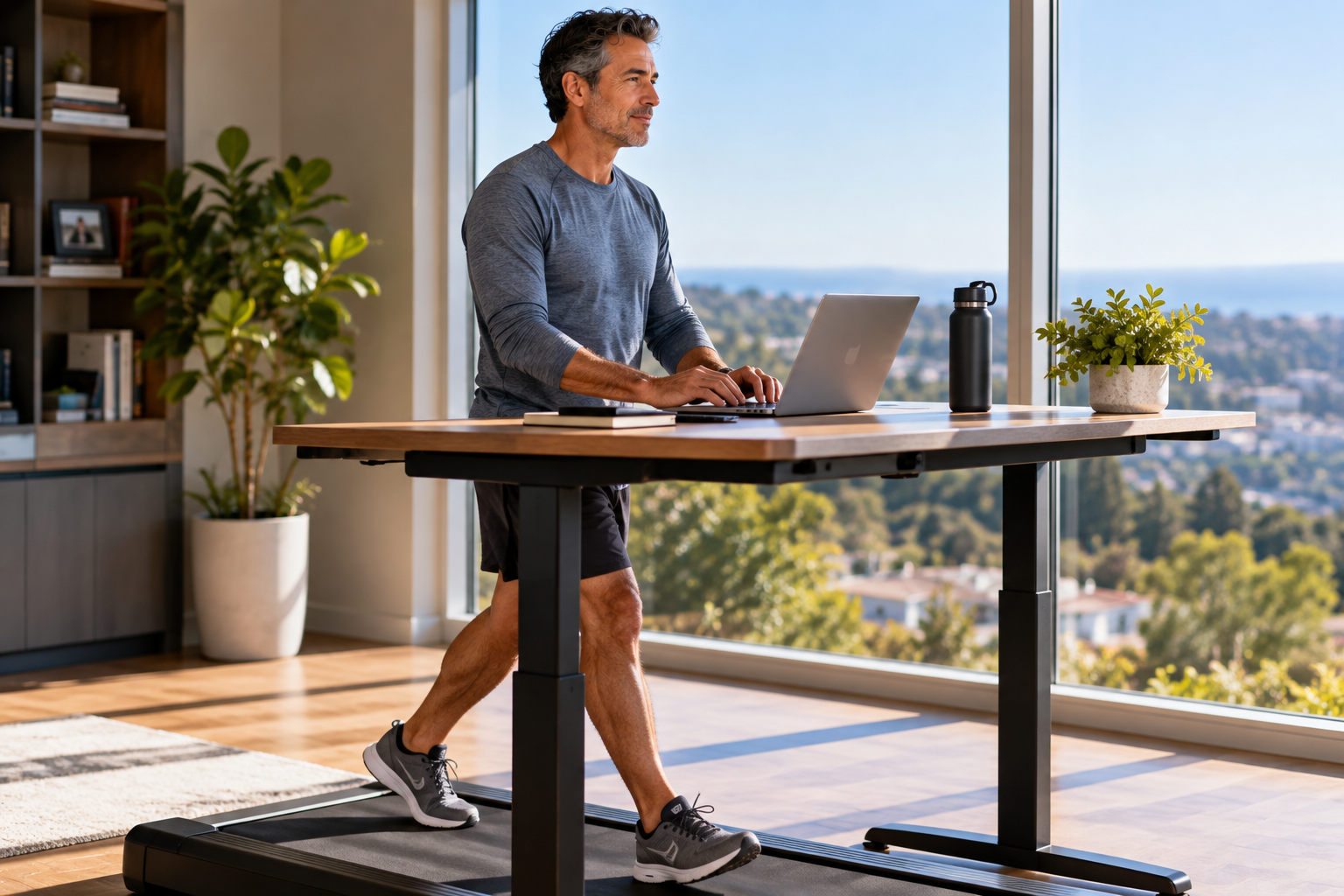
It recommends standing and moving regularly, using walking meetings, standing during phone calls, and using reminders or technology to prompt movement. Pasted text
Those are exactly the kinds of strategies I like because they do not require a major lifestyle overhaul.
Try:
- standing during phone calls
- walking while listening to meetings when possible
- getting up between tasks
- taking a short walk after lunch
- using stairs when practical
- parking slightly farther away
- walking to speak with a coworker instead of sending a message
- taking a few minutes to move every hour or so
These are small changes.
But small changes repeated every day become meaningful.
A Standing Desk Is Useful — But It Is Not the Whole Answer
The original article recommends standing desks and ergonomic workstations. Pasted text
I think standing desks can be helpful.
But simply standing still all day is not the goal either.
The real objective is changing positions and moving more often.
Sit for a while.
Stand for a while.
Walk.
Stretch.
Move.
The best workstation is one that makes movement easier.
Walking Is Still One of the Best Tools
The original article recommends walking as a simple way to stay active. Pasted text
That fits perfectly with The Next 50.
Walking is accessible.
It requires little equipment.
It can be done almost anywhere.
And it is easy to spread throughout the day.
A morning walk.
A short walk after lunch.
Ten minutes after dinner.
A few laps around the building.
It all counts.
Strength Training Matters Too
Reducing sitting time is not enough by itself.
The original article also emphasizes resistance training to help build and maintain muscle. Pasted text
That becomes increasingly important after 50.
Movement keeps us active.
Strength training helps preserve capacity.
The two work together.
You want enough movement to keep the body engaged throughout the day and enough resistance training to preserve the strength needed to keep doing the things you enjoy.
Mobility and Flexibility Still Have a Place
The original article also includes stretching, yoga, and other flexibility work as part of a balanced movement routine. Pasted text
I would think of those as complements.
Walking builds daily movement.
Strength training builds capacity.
Mobility work helps maintain range of motion.
Together, they create a much more complete approach than simply trying to “exercise more.”
How Much Exercise Should You Get?
The original article recommends at least 150 minutes of moderate aerobic activity each week plus muscle-strengthening activity on two or more days. Pasted text
That is a useful benchmark.
But I would not let the number become an excuse.
If you are currently inactive, start smaller.
Walk 10 minutes.
Stand up more often.
Add two short strength sessions.
Build from there.
Consistency matters more than trying to transform your lifestyle overnight.
Make Movement Something You Enjoy
The original article ends with a point I strongly agree with:
Choose activities you actually enjoy. Pasted text
Dance.
Garden.
Walk with friends.
Ride a bike.
Play tennis.
Swim.
Do yoga.
Lift weights.
Play soccer.
The best movement routine is the one you will keep doing.
The Next 50 Takeaway
I would not say sitting is literally the new smoking.
The risks are different.
But sitting too much is still worth taking seriously.
Especially after 50.
The goal is not to panic every time you sit down.
The goal is to stop allowing sedentary behavior to dominate the day.
Exercise.
Walk.
Strength train.
Break up long periods of sitting.
Change positions.
Move whenever you reasonably can.
The original article’s closing message was that reducing sitting and increasing daily movement can support health, independence, and quality of life as we age. Pasted text
That is the message I would keep.
Because The Next 50 is not about becoming obsessed with optimization.
It is about maintaining enough strength, mobility, energy, and capacity to continue living the life we want.
And sometimes the simplest place to start is this:
Get out of the chair.
The Next 50 is about building the strength, health, mobility, resilience, and capacity we want to carry into the decades ahead.