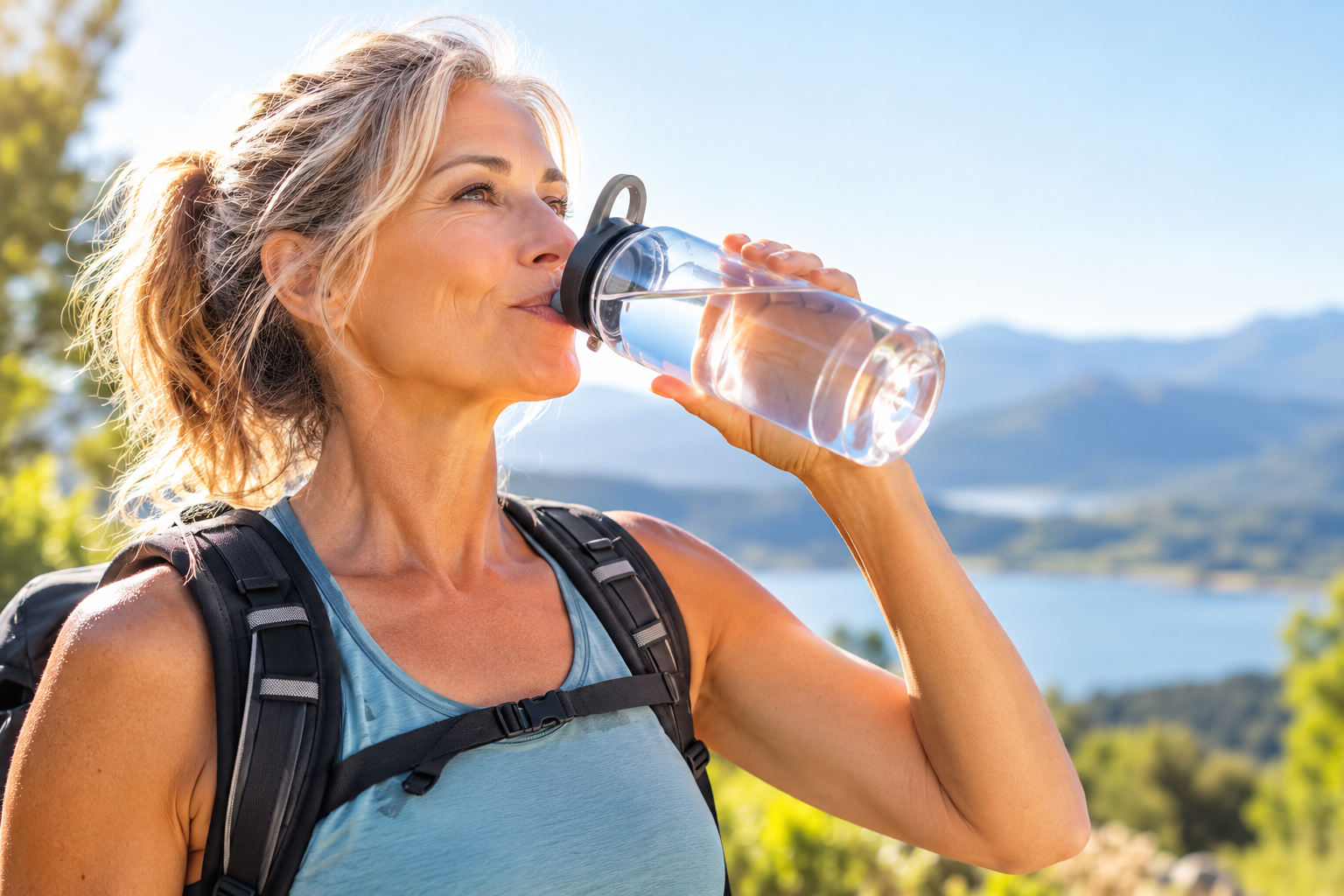
Hydration After 50: Why Drinking Enough Gets More Important With Age
As I approached one of my annual physicals, I felt unusually confident.
In the year leading up to the appointment, I had cut back substantially on alcohol, reduced processed foods, eliminated most candy and sweets, and cleaned up a lot of other habits.
I was ready.
I could practically hear my doctor saying:
“Jesse, everything looks great. Keep doing what you’re doing.”
Instead, one of the first questions he asked was:
How much water are you drinking?
Water?
That was not the direction I expected the conversation to go.
I was prepared to discuss exercise.
Cholesterol.
Alcohol.
Diet.
Blood pressure.
But water?
It turned out to be a better question than I realized.
The older we get, the easier it can become to underestimate something as basic as hydration.
And while drinking enough water is not a magic longevity strategy, staying adequately hydrated becomes increasingly important for maintaining normal physical and cognitive function as we age. Pasted text
Why Hydration Can Become Harder With Age
One of the biggest changes is that thirst may become a less reliable signal.
The original article points out that older adults can experience a diminished sense of thirst, meaning we may not feel thirsty even when the body would benefit from more fluid. Pasted text
That matters because many of us rely on thirst alone.
If thirst becomes less noticeable, fluid intake can gradually drift downward without us realizing it.
Other factors can also complicate hydration:
- certain medications
- chronic medical conditions
- reduced mobility
- hot weather
- exercise
- illness
- difficulty accessing fluids consistently
The original article also notes that medications such as diuretics can increase fluid loss, while conditions like diabetes and heart disease can affect fluid balance. Pasted text
So hydration after 50 can require more intentionality than it did earlier in life.
What Dehydration Can Feel Like
Dehydration does not always announce itself dramatically.
Sometimes it looks like:
- fatigue
- dizziness
- dry mouth
- headache
- weakness
- difficulty concentrating
- darker urine
In more serious cases, dehydration can contribute to confusion, instability, and other problems that are especially concerning in older adults. Pasted text
That is one reason hydration matters so much in the context of healthy aging.
If dehydration contributes to dizziness or weakness, it can indirectly increase the risk of falls.
If it contributes to constipation, physical discomfort increases.
If it affects concentration or alertness, everyday function can suffer.
The point is not that water solves everything.
It is that dehydration can quietly make many things worse.
Hydration Supports the Systems We Depend On
Water plays a role in nearly every major system in the body.
It supports:
- temperature regulation
- blood volume
- kidney function
- bowel regularity
- circulation
- normal muscle function
- electrolyte balance
The original article emphasizes these basic physiological roles and explains why fluid balance becomes particularly important as we age. Pasted text
That is the right way to think about hydration.
Not as a “detox.”
Not as a miracle anti-aging treatment.
Just as one of the basic conditions the body needs to function properly.
How Much Water Do You Actually Need?
This is where simple rules can become misleading.
You have probably heard:
Eight glasses a day.
Or:
Drink half your body weight in ounces.
Or:
A gallon a day.
The truth is that fluid needs vary.
They depend on:
- body size
- activity level
- climate
- diet
- medications
- health conditions
- how much fluid you get from food
The original article suggested 8–10 cups as a general guideline, while also acknowledging that individual needs vary. Pasted text
I think the more useful takeaway is this:
There is no one perfect hydration number for everyone.
Instead, pay attention to patterns.
Are you drinking regularly throughout the day?
Are you exercising?
Are you spending time in the heat?
Are you taking medications that affect fluid balance?
Are you consistently ending the day having barely had anything to drink?
Those questions are more useful than chasing a universal number.
A Simple Way to Monitor Hydration
Urine color can provide a rough clue.
Pale yellow urine generally suggests reasonable hydration, while darker urine may indicate that you need more fluids. Pasted text
But it is not a perfect test.
Certain vitamins, medications, foods, and medical conditions can affect urine color.
So think of it as one clue, not a laboratory measurement.
Other signs matter too:
- thirst
- dry mouth
- dizziness
- fatigue
- reduced urination
The goal is awareness, not obsession.
Build Hydration Into Your Routine
The easiest habits are the ones that do not require constant decision-making.
That is why I like routine.
The original article offers several practical strategies that make sense:
- keep water where you can see it
- carry a reusable bottle
- drink with meals
- drink before, during, and after physical activity
- increase fluids in hot weather
- use water-rich foods such as fruit and vegetables
- add lemon, berries, cucumber, or mint if plain water gets boring Pasted text
These are simple.
That is exactly why they work.
Food Counts Too
Hydration does not come only from a water bottle.
Foods can contribute meaningfully to fluid intake.
Examples include:
- watermelon
- oranges
- berries
- cucumbers
- tomatoes
- soups
- yogurt
That can be especially useful for people who do not naturally drink large amounts of water.
Hydration is really about overall fluid balance, not forcing yourself to drink a specific number of glasses.
Exercise Changes the Equation
If you exercise regularly, especially outdoors, your fluid needs increase.
Sweating means fluid loss.
Heat increases that loss further.
The original article specifically recommends drinking around physical activity and adjusting fluid intake based on climate. Pasted text
That becomes especially relevant after 50 because we may be less tolerant of dehydration than we once were.
If the goal is to stay active, hydration supports that goal.
More Is Not Always Better
There is also an important counterpoint.
More water is not automatically better.
Certain people with:
- kidney disease
- heart failure
- electrolyte disorders
- specific medication regimens
may need individualized guidance about fluid intake.
So hydration should not become another area where we assume “more” must mean “healthier.”
The right amount is the amount that supports your health and matches your individual needs.
Do Not Wait Until You Feel Thirsty
That is probably the most practical lesson.
If thirst becomes less reliable with age, waiting until you feel thirsty may not be enough.
Build drinking into the day.
Morning.
Meals.
Exercise.
Afternoon.
Evening.
Make it automatic.
The original article’s strongest message is that hydration often gets overlooked precisely because it seems too simple. Pasted text
That simplicity is exactly why it deserves attention.
The Next 50 Takeaway
I still think back to that physical and laugh a little.
I had been focused on the big things.
Exercise.
Diet.
Alcohol.
Blood work.
And my doctor asked about water.
There was a lesson in that.
Healthy aging is not always about finding the newest supplement, device, or longevity protocol.
Sometimes it is about getting the basics right.
Move.
Sleep.
Eat well.
Stay strong.
Stay connected.
And drink enough.
Hydration will not make us immortal.
But ignoring it can make the years ahead harder than they need to be.
And The Next 50 is ultimately about doing the simple things that give us the best chance of staying strong, capable, and engaged for as long as possible.
The Next 50 is about building the health, strength, resilience, mobility, and capacity we want to carry into the decades ahead.